Space Launch Sites Worldwide
Information about Space Launch Site Locations Worldwide
Global Rocket Launch Schedule
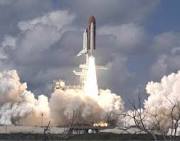 A
directory of scheduled global
rocket launches that have been scheduled throughout the world and hotels near
the launch sites.
A
directory of scheduled global
rocket launches that have been scheduled throughout the world and hotels near
the launch sites.
The schedule is constantly updated and includes notes about the launch and explanations of any delays from original dates. Schedules by specific launch sites such as Kennedy Space Center are available at those sites.
Rocket Launch News
United States Rocket Launch Centers
NASA's Johnson Space Center in Houston, TX
The Johnson Space Center (JSC), located in Houston, Texas, is a crucial hub for NASA's human spaceflight programs. Named after President Lyndon B. Johnson, it was established in 1961 and has been at the forefront of space exploration ever since. JSC houses Mission Control, which manages all crewed space missions, including Space Shuttle flights, and the International Space Station (ISS) operations.
The center is home to astronaut training facilities, including the Neutral Buoyancy Lab supports a massive pool used to simulate weightlessness and advanced simulators that prepare astronauts for the challenges of space. JSC also engages in cutting-edge research, developing technologies for future missions to Mars and beyond.
Educational and public outreach are central to JSC's mission. The Space Center Houston visitor complex offers interactive exhibits, tours, and programs that inspire the next generation of explorers. The center collaborates with universities and industries to advance space science and technology. JSC's legacy is marked by its pioneering achievements and ongoing contributions to space exploration, making it a symbol of human ingenuity and the quest for knowledge. It's not just a cornerstone of NASA but a beacon of inspiration for people around the world.
Kennedy Space Center in Florida
Starbase SpaceX Center in Boca Chica, Texas
Blue Origin Rocket Space Center in Texas - New Shepard Rocket
Blue Origin Rocket Launch Center in Florida - New Glenn Rocket
Spaceport America Virgin Galactic Launch Center near Truth or Consequences, NM
Vandenberg Space Force Base in California
Mid-Atlantic Regional Spaceport, Wallops Island, Virginia
Pacific Spaceport Complex, Kodiak Island, Alaska
Launch Delays and Hotel Bookings
On occasion there are launch delays caused by local weather or weather down range. Delays may also be generated by technical issues, but those are more infrequent than in the past. If you book your hotel for several days you may still be able to see a delayed launch and enjoy the local attractions while you wait.
European Space Agency
Guiana Space Center ZLV, Kourou, French Guiana
The Guiana Space Center is a facility used by the European Space Agency (ESA) and the French government to launch satellites into space. The ESA contributes two-thirds of the spaceport's annual budget and the spaceport has also been used for launches for the United States, Japan, Canada, India and Brazil, among other countries.
Check the Worldwide Rocket Launch Schedule for launch dates. Hotels near Kourou, French Guiana.
Russian Space Agency
Vostochny Cosmodrome, Russia
Operated by Russian Space Agency, this is a Russian spaceport above the 51st parallel north in the Amur Oblast, in the Russian Far East. It is intended to reduce Russia 's dependency on the Baikonur Cosmodrome in Kazakhstan.
Since its inception, there have been numerous launches from this spaceport. It is intended that the majority of launches will be moved from Baikonur to this location.
The nearby train station is Ledyanaya and the nearest city is Tsiolkovsky. Hotels near Tsiolkovsky in Dzershinsk.
Baikonur Cosmodrome, Kazakhstan (Russian)
Operated by Russian Space Agency, this is the launch site for the majority of Soyuz rockets that carry all manned cosmonauts capsules and many supply to the International Space Station (ISS.) Russia will lease this site from Kazakhstan until 2050, but the Russians want to move most of the launch activity to Russia over the next few years.
Star City, Russia
Training center for Russian Cosmonauts and the center of an important television series about the early Russian efforts in the space race. Located in a forest outsite of Moscow, the site was kept secret until a few years ago.
China National Space Administration
China’s space program, led by the China National Space Administration (CNSA), has achieved significant milestones in lunar exploration. One of the most notable achievements is the successful landing of the Chang e-4 mission on the far side of the moon on January 3, 2019. This mission marked the first time any spacecraft had landed on the moon’s far side, a region that presents unique challenges due to its rugged terrain and lack of direct communication with Earth.
Building on this success, China continued its lunar exploration with the Chan e-5 mission, which successfully returned lunar samples to Earth in December 20202. This mission was the first to bring back lunar samples since the 1970s, providing valuable scientific data about the moon's composition and history.
In 2024, China landed in the South Pole-Aitken Basin, the largest impact basin on the moon. This mission aimed to collect samples from the far side of the moon, a feat that had never been accomplished before. China's lunar exploration program is part of a broader strategy to establish a sustainable human presence on the moon.
The CNSA has announced plans to build a lunar research station near the moon's south pole by the 2030s.
China's Space Launch Centers
China currently has five launch sites - four inland and one on the southern island of Hainan known as Wenchang.
The Taiyuan Satellite Launch Center (TSLC) also known as Base 25
The Taiyuan Satellite Launch Center is a China space and defense launch facility (spaceport). It is situated in Kelan County, Xinzhou, Shanxi Province and is the second of four launch sites having been founded in March 1966 and coming into full operation in 1968.
China Wenchang Launch Center
The Wenchang Space Launch Center is located in Wenchang on the island of Hainan, China. It serves as China's fourth and southernmost spaceport, a launch facility capable of launching spacecraft.
This location is notable for being China's first commercial space launch facility, designed to support the growing demand for commercial satellite launches and other space missions. Construction of the Wenchang Commercial Space Launch Site began in July 2022, and the first launch complex was completed by the end of 2023. The space center features two launch pads, with the second pad expected to be operational by the third quarter of 2024. This center is equipped to handle a variety of rockets, including the Long March 8, Long March 8A, and future rockets like the Long March 12 and Tianlong-31.
The Wenchang center is strategically located near the equator, which provides an advantage for launching payloads into geostationary and other orbits. This location allows rockets to take full advantage of the Earth's rotational speed, making launches more efficient and cost-effective. The development of the Wenchang Commercial Space Launch Site is expected to play a crucial role in China's future space missions, including satellite launches, deep space exploration, and potentially crewed missions.
China Jiuquan Satellite Launch Center
Jiuquan Satellite Launch Center is located in the Gobi Desert. This site China is being used to launch personnel to the new Tiangong Space Station it launched in 2021 as well as various satellites used for communication purposes. Hotels Near Jiuquan Satellite Launch Center
China Xichang Satellite Launch Center ( XSLC )
China Xichang Satellite Launch Center ( XSLC ), also known as the Xichang Space Center, is a spaceport in China. It is located in Zeyuan Town , approximately 64 kilometers (40 mi) northwest of Xichang, Liangshan Yi Autonomous Prefecture in Sichuan .
China Launch Site 5
China has started construction on a fifth rocket launch center in the county of Xiangshan, or Elephant Hill. This site will be used to launch heavy rockets to the moon and Mars. From this site China placed a space station in Orbit in 2021 that will be enhanced with additional modules over the next two years.
India's Space Program
Satish Dhawan Space Center, Sriharikota, India
The Satish Dhawan Space Center (SDSC), also known as Sriharikota Range (SHAR), is India's primary spaceport located in Sriharikota, Andhra Pradesh. Named after the former chairman of the Indian Space Research Organisation (ISRO), Satish Dhawan, it is the launch site for India's most ambitious space missions. The facility, operational since 1971, includes multiple launch pads and extensive support infrastructure. SDSC plays a pivotal role in the launch of both satellites and manned missions, including the notable Chandrayaan and Mangalyaan missions. It symbolizes India's growing capabilities in space exploration and satellite technology.
India’s space program, led by the Indian Space Research Organisation (ISRO), has made remarkable strides since its inception in 1969. Established to harness space technology for national development, ISRO has grown into a major player in global space exploration.
One of ISRO’s early milestones was the launch of Aryabhata, India’s first satellite, in 1975. This achievement marked India’s entry into the space age1. Over the years, ISRO has developed a series of successful launch vehicles, including the Polar Satellite Launch Vehicle (PSLV) and the Geosynchronous Satellite Launch Vehicle (GSLV), which have been instrumental in deploying satellites for various purposes, from communication to earth observation. ISRO’s Chandrayaan missions have been particularly noteworthy.
Chandrayaan-1, launched in 2008, was India’s first lunar probe and made significant discoveries, including evidence of water molecules on the moon. Building on this success, Chandrayaan-2 aimed to explore the moon’s south pole, although its lander faced challenges during descent. The upcoming Chandrayaan-3 mission aims to achieve a successful soft landing on the lunar surface.
In addition to lunar exploration, ISRO has also ventured into interplanetary missions. The Mars Orbiter Mission (Mangalyaan), launched in 2013, made India the first Asian nation to reach Mars orbit and the fourth space agency globally to do so. This mission demonstrated ISRO’s capability in cost-effective space exploration. Looking ahead, ISRO has ambitious plans, including the Gaganyaan mission, which aims to send Indian astronauts into space, and the Aditya-L1 mission to study the sun.
Hotels near Satish Dhawan Space Center.
Japan's Space Program
Japan Aerospace Exploration Agency, Tsukuba, Ibaraki, Japan
Japan’s space program, spearheaded by the Japan Aerospace Exploration Agency (JAXA), has a rich history and a promising future. Established in 2003 through the merger of three separate organizations, JAXA is responsible for all civilian space activities in Japan. The origins of Japan’s space endeavors date back to the mid-1950s with the launch of the Pencil Rocket, a small experimental rocket developed by Hideo Itokawa and his team at the University of Tokyo.
Over the decades, Japan’s capabilities have grown significantly, leading to the development of advanced rockets like the H-IIA and H-IIB, which are used for satellite launches and other missions. One of JAXA’s notable achievements is its contribution to the International Space Station (ISS). The Japanese Experiment Module, known as “Kibo,†is the largest module on the ISS and serves as a laboratory for various scientific experiments. Additionally, JAXA’s HTV (H-II Transfer Vehicle), nicknamed “Kounotori,†has been crucial for delivering supplies to the ISS.
Japan has also made significant strides in planetary exploration. The Hayabusa missions, which aimed to collect samples from asteroids, have been particularly successful. Hayabusa, launched in 2014, returned samples from the asteroid Ryugu in 2020, providing valuable insights into the early solar system.
Looking ahead, JAXA is involved in ambitious projects such as the Lunar Polar Exploration Mission (LUPEX) in collaboration with India, and the Martian Moons exploration (MMX) mission, which aims to explore the moons of Mars. These initiatives have contributed greatly to global scientific knowledge.
Hotels near Japan Aerospace Exploration Agency
New Zealand
The Rocket Lab Launch Complex 1, located on the MÄhia Peninsula in New Zealand, is a pioneering commercial spaceport. Owned and operated by Rocket Lab, it supports launches of the Electron rocket for small satellites. Since its opening in 2016, it has become the first private spaceport to host an orbital launch attempt and a successful orbital launch. The site features advanced infrastructure, including a launch platform, hangar, and storage tanks for rocket propellants. With its strategic location, it can reach a variety of orbits, making it a vital hub for satellite deployment.
Email the Webmaster.
Copyright 2026 wellingtonhorse.com/space-coast/ All rights reserved.